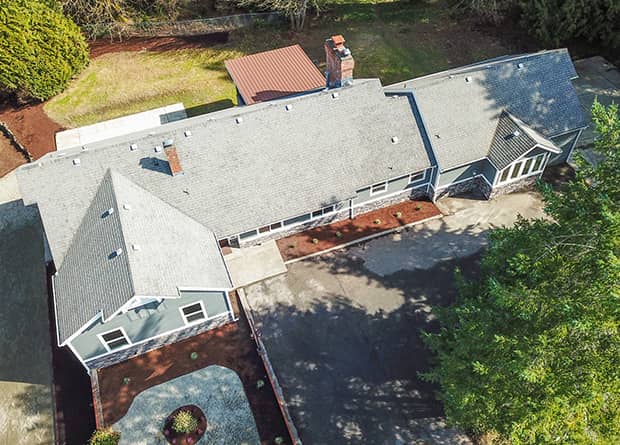
If you’re getting ready to sell your house in Springfield, Republic, Branson, or anywhere in Southwest Missouri, there’s a pretty good chance you’ve wondered:

“Is my roof going to pass the home inspection?”
And if your roof is 15, 20, or even 25 years old, you might be a little nervous about the answer.
Here’s something I think every homeowner should understand before putting their house on the market.
A roof doesn’t technically pass or fail a standard home inspection. But the condition of your roof can absolutely make or break a real estate transaction.
I’ve owned a roofing company since 2017, and before that, I spent years working as an insurance agent and adjuster. I’ve inspected thousands of roofs and dealt with just about every roofing situation you can imagine.
And one thing I’ve learned is that a roof can look perfectly fine from the driveway but tell a completely different story once somebody actually gets up there and takes a closer look.
I’ve also seen homeowners prepare to spend $20,000 or $30,000 replacing a roof because a buyer’s inspector identified problems, only to discover that their homeowners insurance might actually cover the damage.
So before you agree to replace your roof, offer the buyer a huge credit, or potentially lose a sale, there are a few things you really need to know.
1. What Roof Problems Will a Home Inspector Flag When Selling a House?
When you’re selling a home in Springfield, Republic, or Branson, the buyer will typically hire a home inspector to evaluate the property’s condition.
That inspector is going to look for visible signs of damage, deterioration, improper installation, and other issues that could affect the home.
And roofing problems tend to get a lot of attention.
Why?
Because nobody wants to purchase a house and immediately discover they need to spend $15,000 or $20,000 replacing the roof.
Here are some of the biggest problems I’ve seen create issues during real estate transactions.
Hail and Wind Damage
Living in Southwest Missouri, we’re certainly no strangers to severe thunderstorms.
Springfield, Republic, Nixa, Ozark, Branson, and the surrounding communities regularly experience hail and damaging winds.
If your roof has significant hail damage, missing shingles, lifted shingles, or other obvious storm damage, there’s a good chance the buyer’s inspector is going to identify it.
And once that happens, the buyer may ask you to repair the damage, replace the roof, or provide a financial concession.
Sometimes the buyer’s insurance company may also have concerns about insuring the property.
But here’s where things get interesting.
Just because your roof has hail or wind damage doesn’t automatically mean you’re responsible for paying the entire replacement cost out of pocket.
Depending on when the damage occurred, your insurance policy, and the circumstances of the loss, you may have a legitimate insurance claim.
I’ll share a real example of that in a minute.
Active Roof Leaks and Ceiling Stains
This one’s pretty straightforward.
If a home inspector walks into a bedroom and sees a large brown water stain on the ceiling, that’s probably going to raise some questions.
And rightfully so.
Water stains can indicate an active leak, an old repaired leak, condensation, or another moisture problem.
The important thing is figuring out what’s actually causing it.
Sometimes it’s a relatively simple flashing repair.
Other times, the roof has deteriorated to the point where replacing it makes more sense than continuing to patch it.
Either way, the buyer is probably going to want some answers before closing.
Soft Spots, Dips, and Uneven Roof Surfaces
This is another big one.
If somebody gets up on your roof and notices multiple soft spots, dips, humps, or areas that feel unstable, that can indicate problems beneath the shingles.
Maybe the decking has deteriorated from moisture.
Maybe the roof was improperly installed.
Or maybe there’s an underlying structural issue.
Not every uneven area means the roof needs replacement, but widespread soft spots or deteriorated decking are serious concerns.
And those are the types of problems that can make buyers extremely uncomfortable.
Severe Granule Loss
Asphalt shingles have protective granules on their surface.
Over time, those granules gradually wear away.
Some granule loss is normal, especially as a roof ages.
But when shingles have widespread, severe granule loss, that’s a different story.
It can indicate significant deterioration and reduced protection from sunlight and weather.
I’ve seen roofs where the granule loss was so extensive that it was difficult to reasonably recommend anything other than replacement.
And when a buyer’s inspector identifies that kind of deterioration, it’s not something that can always be solved with a few repairs.
Damaged Flashings and Animal Intrusion
Here’s one homeowners don’t always think about.
I’ve seen rodents and other animals damage roofing materials, chew or disturb components around flashing, and find their way beneath shingles or into areas near gutters and gutter guards.
Those openings can allow moisture and pests into areas where they don’t belong.
We also commonly see issues around plumbing vents, chimneys, roof-to-wall transitions, and other penetrations.
The good news is that some of these problems can be repaired without replacing the entire roof.
But they still need to be identified and addressed.
2. Can a Roof Look Good From the Ground but Fail a Closer Inspection?
Absolutely.
In fact, I’d say this is more the rule than the exception.
I can’t tell you how many times I’ve pulled up to a house and thought the roof looked pretty decent from the driveway.
Then I get up there, start walking the roof, and discover problems that were practically invisible from the ground.
You might have hail bruising that only becomes apparent when you’re standing directly over the shingles.
You might have deteriorated areas around penetrations.
You might have improperly installed flashing or areas where the shingles aren’t sealing correctly.
And sometimes you find soft decking that simply can’t be identified from the street.
That’s why I don’t recommend relying exclusively on how your roof looks from the driveway when preparing to sell your house.
A proper roof inspection should involve a close examination of the roofing system whenever it can be performed safely.
Photos are extremely helpful, but even photographs don’t always tell the entire story.
Sunlight, shadows, camera angles, and the color of the shingles can make certain types of damage difficult to see.
Sometimes you need to physically inspect the material to understand the severity of the problem.
And that’s where having an experienced roofing contractor can make a big difference.
3. What Happens If the Buyer’s Home Inspector Says You Need a New Roof?
This is where sellers tend to get nervous.
Let’s say you’re selling your house in Republic, Missouri.
You’ve accepted an offer, everybody’s excited, and you’re expecting to close in a few weeks.
Then the buyer’s home inspection comes back.
The inspector identifies significant roof deterioration and recommends further evaluation by a roofing contractor.
Suddenly, the buyer wants a new roof.
Or maybe they’re asking for a $15,000 reduction in the purchase price.
Now what?
First, don’t automatically agree to replace the roof just because the inspection report recommends further evaluation.
That doesn’t mean you should ignore legitimate problems.
It means you should get enough information to make an informed decision.
There are several possible outcomes.
Option 1: Make the Necessary Repairs
Sometimes the roof is generally in good condition but has a handful of problems that need attention.
Maybe there’s a damaged pipe boot.
Maybe some flashing needs to be repaired.
Maybe a few shingles are missing or damaged.
In those situations, a targeted repair or roof tune-up might be all that’s necessary.
We can document the problems, complete the repairs, and provide before-and-after photographs.
That documentation can be shared with the buyer and real estate agents.
If the repairs adequately address the concerns and satisfy the parties involved, the transaction may be able to move forward without replacing the entire roof.
Option 2: Replace the Roof Before Closing
Sometimes the roof really is at the end of its useful life.
Maybe there’s widespread deterioration, significant granule loss, multiple soft spots, or damage that simply isn’t practical to repair.
In those situations, replacing the roof before closing may be the most reasonable solution.
But before you write that check, there’s another question worth asking.
Could any of the damage be covered by your homeowners insurance?
That brings me to a real situation we handled near Table Rock Lake.
4. A Real Example: How We Helped a Kimberling City Homeowner Avoid Paying $25,000–$30,000 for a New Roof
This is one of my favorite examples because it shows why getting the right roofing contractor involved before making a major financial decision can be so important.
We were contacted about a house in Kimberling City, Missouri, near Table Rock Lake.
The property was vacant.
The homeowner actually lived in Kansas City and was trying to sell the lake house.
During the buyer’s home inspection, the inspector identified substantial granule loss and what appeared to be hail damage.
Naturally, the buyers were concerned.
And the seller wasn’t particularly excited about the possibility of spending tens of thousands of dollars replacing a roof right before selling the property.
They contacted us to take a look.
What We Found
When I inspected the roof, I confirmed that there was legitimate hail damage.
I took photographs documenting the damage and provided a storm report identifying when a significant storm had moved through the area.
Because of my background working as an insurance agent and adjuster, I was also able to explain what the insurance company would likely be looking for when evaluating the claim.
Based on the damage I observed, I felt there was a strong possibility the claim would be approved.
Of course, no roofing contractor can guarantee what an insurance company will cover.
But in this particular situation, the evidence was pretty compelling.
We Handled the Process Without the Seller Having to Travel
Remember, the homeowner lived in Kansas City.
They weren’t interested in repeatedly driving down to Kimberling City to meet contractors, inspectors, and insurance adjusters.
So we handled the on-site coordination.
I met the insurance adjuster at the property, showed them the damage, and provided the supporting documentation.
And the result?
State Farm approved the roof replacement under the homeowner’s insurance claim.
The replacement was covered subject to the homeowner’s deductible and applicable policy terms.
The roof was a pretty good size, and the replacement cost was approximately $25,000 to $30,000.
Instead of paying that entire amount out of pocket, the seller’s responsibility was approximately $1,000 to $1,500 for their deductible.
That’s a pretty significant difference.
And the best part was that the buyers were happy, the sellers were happy, and the real estate transaction could move forward.
Neither the seller nor the buyer needed to be physically present while I handled the on-site inspection and adjuster meeting.
We coordinated everything remotely.
Why This Matters If You’re Selling a Home
Imagine if that seller had immediately agreed to give the buyer a $25,000 credit without having the roof professionally evaluated.
Or if they had paid cash to replace the roof without investigating whether there was legitimate storm damage covered by insurance.
They potentially could have spent a substantial amount of money unnecessarily.
Now, I’m not saying every deteriorated roof is going to qualify for an insurance replacement.
Far from it.
Normal wear and tear generally isn’t covered by homeowners insurance.
And insurance claims depend on the policy, cause of loss, applicable deadlines, and supporting evidence.
But when legitimate storm damage is present, it’s worth understanding your options before making a major financial decision.
5. Should I File an Insurance Claim Before Selling My House?
Maybe.
But I wouldn’t automatically recommend filing a claim just because somebody says your roof needs replacement.
This is where I think my insurance background is particularly helpful.
Before getting into roofing, I worked as an insurance agent and adjuster.
I’ve handled thousands of insurance claims over the years, and I understand how insurance companies evaluate storm damage.
When I inspect a roof, I’m not just looking at whether it needs repairs or replacement.
I’m also evaluating whether the damage appears consistent with a covered event.
For example, there’s a big difference between shingles that have deteriorated from 25 years of sunlight and weather exposure and shingles that sustained legitimate hail damage during a recent storm.
Those two situations can look similar to an inexperienced person.
But from an insurance standpoint, they’re very different.
If I inspect your roof and believe there’s legitimate storm damage, I’ll explain why and provide photographs documenting what I found.
If I believe the roof is simply worn out and there’s little reason to expect insurance coverage, I’ll tell you that too.
Because filing an insurance claim isn’t always the best decision.
A claim can consume time, may be recorded in your claims history, and doesn’t guarantee payment.
And when you’re trying to close on a house in three or four weeks, time matters.
My advice is to get an experienced roofing contractor to inspect the roof and explain the findings before deciding whether filing an insurance claim makes sense.
The insurance company ultimately determines coverage, but having accurate information can help you avoid unnecessary surprises.
6. Can I Sell My House With an Old Roof?
Yes.
There’s no universal rule that says you must replace your roof before selling your house.
A 20-year-old roof doesn’t automatically make a home unsellable.
But the roof’s condition, the buyer’s expectations, and the requirements of their mortgage lender and insurance company can all affect the transaction.
For example, a buyer purchasing a house with cash may be willing to accept an older roof and plan to replace it later.
Another buyer may be obtaining a mortgage that has specific property-condition requirements.
And even if the lender is satisfied, the buyer’s homeowners insurance company might have concerns about the roof’s age or condition.
Some insurers may require repairs, decline coverage, impose restrictions, or request additional documentation.
That’s why I recommend addressing roofing concerns as early as possible.
If you’re planning to list your house in Springfield, Republic, or Branson, you don’t necessarily need to replace the roof before listing.
But knowing its actual condition can put you in a much better negotiating position.
7. Can I Just Repair the Roof Instead of Replacing It Before Selling?
Sometimes, absolutely.
And this is one of the first things sellers usually ask me.
They don’t necessarily want a brand-new roof.
They want to know what needs to be done to get the property sold.
I understand that.
If the roof is still reasonably serviceable and the problems are limited to a few repairable areas, we may be able to address those issues without replacing the entire roofing system.
That might involve replacing damaged shingles, repairing flashing, correcting exposed fasteners, sealing appropriate penetrations, or addressing minor leak sources.
We can document the work and provide photographs for the seller and their real estate agent.
But I want to make an important distinction.
A roof repair doesn’t magically turn a worn-out roof into a new roof.
If the shingles are severely deteriorated, the decking is failing, or the roof has widespread damage, a few repairs may not be sufficient.
And if the buyer’s lender or insurance company requires replacement, temporary repairs may not resolve that requirement.
That’s why the inspection findings matter.
You need to know whether you’re dealing with a repairable problem or a roof that has reached the point where replacement is the better long-term solution.
8. Should I Wait for Another Hailstorm Before Replacing My Roof?
This is a conversation that comes up fairly often in Southwest Missouri.
We experience severe weather regularly, and some homeowners wonder whether it makes sense to repair immediate problems and wait to see if a future storm causes covered damage.
Here’s how I look at it.
If the roof is still serviceable and only needs a few legitimate repairs, there’s nothing wrong with maintaining it rather than replacing it prematurely.
But I would never recommend ignoring active leaks or serious deterioration while hoping an insurance company will eventually pay for a new roof.
A future storm isn’t guaranteed to damage your property.
And even if hail or wind damage occurs, that doesn’t guarantee the insurance company will approve a full replacement.
Insurance generally covers damage resulting from covered events, not preexisting wear and tear.
So the right approach is to evaluate the roof’s current condition, complete necessary maintenance, document any existing damage, and make decisions based on the actual condition of the property.
If a future storm causes legitimate covered damage, that can be evaluated separately under the applicable insurance policy.
But when you’re selling a house, your immediate priority should be making sure the property is safe, accurately represented, and acceptable to the buyer and any applicable lender or insurer.
9. Should I Get My Roof Inspected Before Listing My House?
Personally, I think this is one of the smartest things a seller can do, especially if the roof is older or has been through several hailstorms.
Think about it.
You’re preparing to sell your house.
You’re cleaning everything, making minor repairs, painting rooms, and getting the property ready for photographs.
Then you accept an offer.
Everything’s going great until the buyer’s inspection reveals a roofing problem.
Now you’re trying to figure out whether you need a repair, a replacement, or an insurance claim while the closing date is getting closer.
That’s a stressful situation that could potentially have been avoided.
Instead, consider having the roof inspected before listing.
At Bold Roofing, we can provide a detailed roof inspection with photographs documenting our findings.
We can identify visible storm damage, deterioration, flashing issues, potential leak sources, and other concerns.
And we’ll explain whether the roof appears to need maintenance, repairs, or replacement.
If we identify legitimate storm damage, we can also explain what documentation may be useful if you decide to contact your insurance company.
That doesn’t mean you have to replace your roof before listing.
It simply means you know what you’re dealing with.
And I think having that information gives you a much better position when negotiating with a buyer.
10. What Should Realtors in Springfield, Republic, and Branson Do When a Roof Issue Threatens Closing?
If you’re a real estate agent in Southwest Missouri, you’ve probably experienced this situation.
You’re a week or two away from closing.
The inspection report comes back.
There’s a roofing concern.
And suddenly everybody’s looking at you to figure out what happens next.
The buyer wants answers.
The seller doesn’t want to spend more money.
And the lender or insurance company may need documentation before the transaction can proceed.
That’s where having a reliable roofing contractor can make a big difference.
At Bold Roofing, we understand that real estate transactions operate on deadlines.
Sometimes you don’t have three weeks to wait for somebody to come out and take a look.
You need somebody who can evaluate the roof, document the findings, explain the options, and provide an estimate quickly.
And just as importantly, you need somebody who isn’t going to automatically recommend a full roof replacement when a reasonable repair could solve the problem.
Our goal is to provide accurate information and practical solutions.
Sometimes that’s a minor repair.
Sometimes it’s a roof tune-up.
Sometimes it’s a replacement estimate.
And sometimes it’s helping the homeowner document legitimate storm damage for an insurance claim.
Whatever the situation, we want the seller, buyer, and real estate professionals to have the information they need to make a decision.
Frequently Asked Questions About Roof Inspections When Selling a Home in Missouri
Will a 20-Year-Old Roof Pass a Home Inspection?
A 20-year-old roof can still be acceptable to a buyer, but age alone doesn’t determine its condition. The inspector will look for signs of deterioration, damage, leaks, and other problems. The buyer’s lender or insurance company may also have separate requirements.
Can a Buyer Demand a New Roof Before Closing?
A buyer can request a new roof, repairs, or a price concession based on inspection findings. Whether the seller must agree depends on the purchase contract, negotiations, and any applicable lender or insurance requirements.
Do I Have to Replace My Roof to Sell My House in Missouri?
Not necessarily. Missouri doesn’t have a universal requirement that every home must have a new roof before it can be sold. However, significant roofing defects may affect negotiations, financing, insurance eligibility, and disclosure obligations.
Can Hail Damage Be Covered by Insurance Before Selling My House?
Potentially. If the damage resulted from a covered storm and meets the requirements of your homeowners insurance policy, the insurer may pay for eligible repairs or replacement, subject to the deductible and policy terms.
Will My Homeowners Insurance Pay for an Old Roof?
Insurance generally doesn’t pay to replace a roof simply because it’s old or worn out. However, an older roof may still have coverage for certain storm damage, depending on the policy, exclusions, depreciation provisions, and cause of loss.
Can I Sell My House With a Roof Leak?
Potentially, but an active leak can complicate negotiations and may affect financing or insurance. Known material defects may also need to be disclosed as required by applicable law and contractual obligations. Repairing and documenting the leak before listing can help avoid problems.
Should I Get a Roof Inspection Before Selling My House in Springfield, MO?
If your roof is older, has experienced severe storms, or shows signs of deterioration, a professional inspection before listing can help identify potential issues early and reduce surprises during negotiations.
Does Bold Roofing Help With Real Estate Roof Inspections in Republic and Branson?
Yes. Bold Roofing serves homeowners and real estate professionals in Springfield, Republic, Branson, Nixa, Ozark, Highlandville, Hollister, Branson West, Kimberling City, and surrounding Southwest Missouri communities.
We provide roof inspections, photo documentation, repair recommendations, replacement estimates, and assistance with construction documentation related to storm damage claims.
My Final Advice: Don’t Agree to a $20,000 Roof Replacement Without Getting the Facts First
If you’re getting ready to sell your house and you’re worried about whether your roof will pass inspection, here’s my biggest piece of advice.
Have an experienced roofing contractor inspect your roof and provide you with a detailed photo report before you make any major decisions.
And if possible, find somebody who also has experience working with homeowners insurance claims.
That’s a pretty unique combination of knowledge, and it can be extremely valuable when you’re trying to determine whether the roof needs repairs, replacement, or potentially qualifies for insurance coverage.
Sometimes the problem is relatively minor.
Sometimes the roof genuinely needs replacement.
And sometimes, like the Kimberling City homeowner I mentioned earlier, you discover legitimate storm damage that your insurance company may cover.
But you won’t know until somebody takes a proper look.
At Bold Roofing, we’re not interested in recommending a $20,000 roof replacement when a $500 repair could adequately solve the problem.
And we’re certainly not interested in telling homeowners to file insurance claims that have little legitimate basis.
We want to identify the problem, explain the options, and help you make the right decision.
Because when you’re selling your home, the last thing you need is an unexpected roofing issue putting your entire transaction at risk.
Selling Your Home in Springfield, Republic, or Branson, Missouri? Let Bold Roofing Take a Look.
If you’re preparing to sell your house, dealing with a buyer’s inspection report, or trying to resolve a roofing concern before closing, we’d be happy to help.
Bold Roofing serves homeowners and real estate agents throughout Southwest Missouri, including Springfield, Republic, Branson, Nixa, Ozark, Highlandville, Hollister, Branson West, Kimberling City, and surrounding communities.
We can inspect your roof, document our findings with photographs, explain what repairs may be necessary, and provide a clear estimate if replacement is needed.
And if there’s legitimate storm damage, our insurance experience can help you understand the documentation and process involved in pursuing a claim.
Whether you’re the seller, buyer, or real estate agent, our goal is simple:
Get you accurate answers, practical solutions, and help keep your real estate transaction moving forward.
Contact Bold Roofing today to schedule a roof inspection or request an estimate.
Out with the OLD roof. In with the BOLD roof!